Source Dishwasher Safe Turkey Baster With Cleaning Brush
Find 30 options for a dishwasher safe turkey baster with cleaning brush designed for efficient kitchen maintenance. Compare plastic construction, eco-friendly features, and custom branding to select the ideal tool for home or commercial culinary tasks; compare the available evidence and request quotations based on your requirements.
Key considerations
Products List


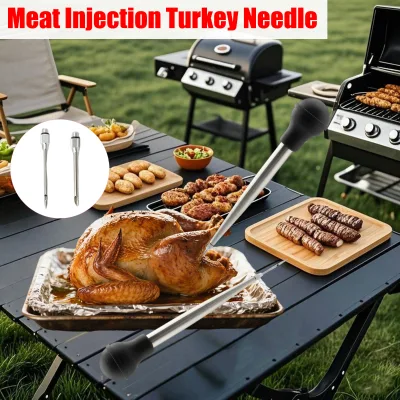
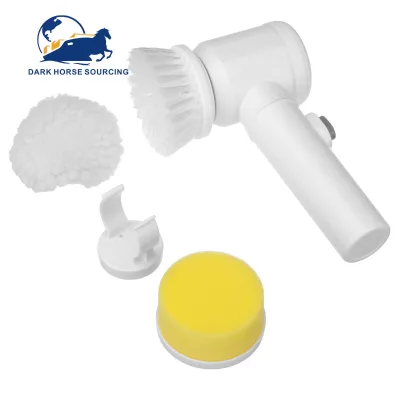

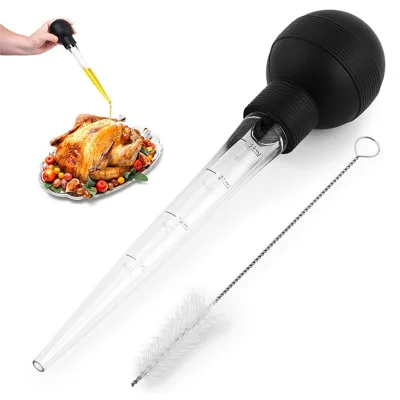
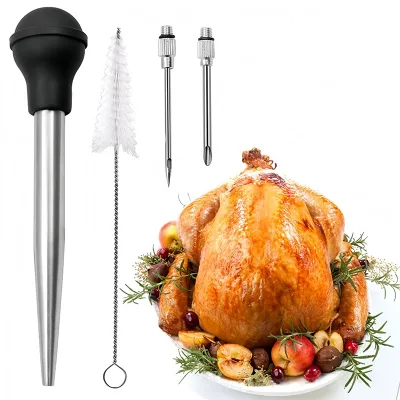



Comprehensive Sourcing Guide
Dishwasher Safe Turkey Baster with Cleaning Brush Sourcing Guide
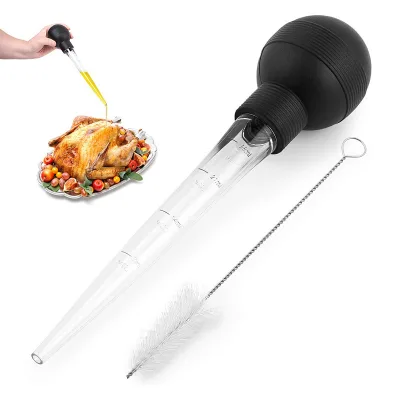
Procurement teams must first distinguish between general kitchen cleaning tools and specialized basting equipment, as the supplied data primarily describes scourers and brushes rather than basters. The observed product attributes highlight items with "Super Cleaning Ability" and "Eco-Friendly" features, yet the specific "dishwasher safe" claim for a turkey baster requires independent verification against the provided material lists. Buyers should treat the listed "Plastic" and "ABS Plastic" materials as potential candidates but must confirm that the specific basting mechanism meets the thermal and chemical resistance standards required for dishwasher cycles.
The observed listing signals indicate a strong focus on manual cleaning styles, with attributes like "SCOURER" and "Kitchen Cleaning Brushes" dominating the inventory. While the data mentions "Repeated Use" and "Easily Cleaned" features, these apply to the brush components rather than the basting vessel itself. Sourcing strategies should prioritize suppliers who can explicitly demonstrate that their basting units, when paired with the observed cleaning brushes, maintain structural integrity after repeated exposure to high-temperature wash cycles and harsh detergents.
Product Scope and Observed Listing Signals
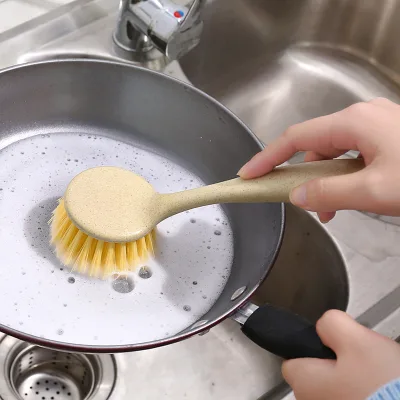
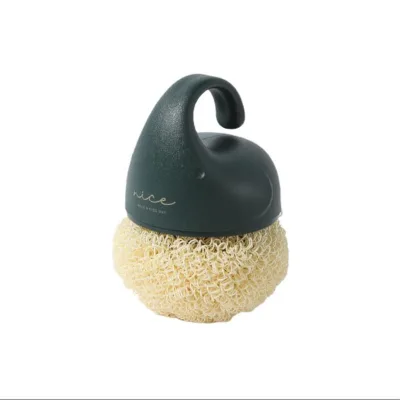
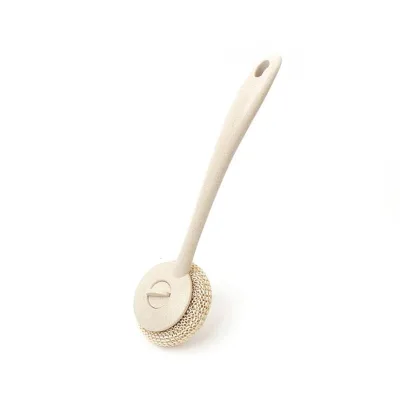
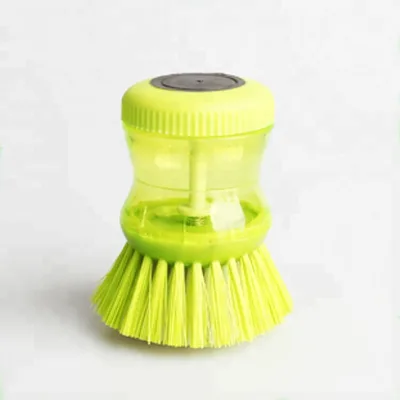
The current market data reveals a significant gap between the core keyword and the available product attributes, which are heavily skewed toward manual scrubbing tools like "SCOURER" and "Dish" brushes. The observed "Product name" entries confirm the presence of "kitchen Cleaning Brushes" with "Plastic" and "ABS Plastic" handles, but there is no direct evidence of a complete turkey baster assembly in the provided specifications. Buyers must carefully filter listings to ensure the "Cleaning Brush" component is compatible with the specific basting tool they intend to purchase, rather than assuming the brush alone satisfies the basting requirement.
Listing signals show a wide range of "MOQ" values from 10 to 11,111 pieces, suggesting that suppliers may offer different tiers of customization for brush-only items versus full basting kits. The "Customization: Available" and "Customized" attributes indicate flexibility in branding and design, yet the "Single package size" of 23x6x5 cm suggests compact, individual brush packaging rather than larger basting sets. Procurement teams should verify if the "Color: Multicolor" and "Unicolor" options extend to the basting mechanism or are limited to the brush bristles and handles.
Technical Specifications to Verify
Verification of the "Handle Material" and "Brush Head Material" is critical, as the data lists "ABS Plastic" and "Plastic&TPR" respectively, which may not inherently guarantee dishwasher safety for all components. Buyers must confirm that the "Brush Head Size" of 5x8 cm and the "Handle Type" are designed to withstand the mechanical agitation and thermal shock of commercial dishwashers without degrading or losing bristle integrity. The "Standard" dimensions provided, such as 25x3x9 cm or 29x5x4 cm, serve as reference points but do not confirm the specific thermal ratings required for the "Dishwasher Safe" claim.
The "Product name" and "Type" attributes indicate a focus on "Soft Bristle Brush" and "Manual" styles, which implies that the cleaning action is manual rather than automated. However, the "Feature: Easily Cleaned" suggests that the design facilitates maintenance, a prerequisite for dishwasher compatibility. Sourcing teams must explicitly request technical data sheets that validate the "Plastic" and "TPR" materials against specific dishwasher detergent formulations and temperature ranges, as the generic "Plastic" label does not confirm resistance to the high heat and chemical exposure found in industrial cleaning cycles.
Compliance and Safety Documentation
Food contact safety is paramount when sourcing items labeled for kitchen use, yet the provided facts do not list specific certifications like FDA or LFGB compliance for the "Plastic" materials. Buyers must demand proof that the "Handle Material" and "Brush Head Material" meet the necessary food-grade standards for repeated contact with food and cleaning agents. The absence of explicit certification data in the observed attributes means that relying on the "Eco-Friendly" claim alone is insufficient for ensuring the product is safe for use in a professional kitchen environment.
Documentation regarding the "Packing" methods, such as "Opp Bag" or "Color Sleeve," should also be reviewed to ensure that the packaging materials do not introduce contaminants during the cleaning process. While the "Standard" dimensions are provided, the "Single gross weight" of 0.100 kg does not indicate the durability of the materials under stress. Procurement teams should require third-party test reports confirming that the "Cleaning Brush" and any associated basting components are free from harmful substances and are safe for the intended "Dish" and "Kitchen" applications.
Cost Drivers and Commercial Terms
The observed "MOQ" range of 10 to 11,111 pieces creates a significant variance in unit economics, requiring buyers to align their order volume with the supplier's production capabilities. The "Selling Units" are listed as "Single item," which may simplify initial sampling but could complicate bulk pricing for complete basting kits. Buyers should negotiate based on the "Customization: Available" attribute, as personalized branding or specific material upgrades can significantly impact the final cost per unit.
Payment terms are standardized to "T/T" across the observed listings, which is a common practice but requires careful management of cash flow and risk. The "Sample Time" of 5-7 days and "Sample" quantity of 1-5 PCS allow for quick validation of the "Dishwasher Safe" claim, but the lead time for full production remains undefined in the provided data. Procurement teams must clarify the "Lead Time" for bulk orders to avoid delays, especially when dealing with the "Customized" options that may extend the manufacturing schedule beyond the standard production window.
Supplier Qualification and Quality Control
Supplier qualification should focus on their ability to provide consistent "Plastic" and "TPR" materials that meet the "Eco-Friendly" and "Repeated Use" claims without compromising structural integrity. The "Place of Origin" is listed as "Zhejiang, China," a region known for manufacturing, but buyers must verify the specific factory's quality control processes for food-grade plastics. The "Feature: Eco-Friendly" attribute suggests a commitment to sustainability, yet this must be backed by verifiable sourcing practices for the raw materials used in the "Handle" and "Brush Head."
Quality control protocols must include rigorous testing of the "Brush Head Size" and "Handle Type" to ensure they do not degrade after multiple dishwasher cycles. The "Style: Manual" and "Style: Hand" attributes indicate that the product relies on user interaction, making the durability of the connection between the handle and the brush head a critical failure point. Buyers should implement a sampling plan that tests the "Single package size" and "Packing" integrity to ensure the product arrives in a condition that supports its "Super Cleaning Ability" claim.
Long-Term Procurement Checks
Long-term procurement strategies must account for the potential variability in "Color" and "Style" options, which could affect brand consistency over time. The "Customized" and "Customization: Available" attributes offer flexibility, but buyers must establish strict guidelines to ensure that future orders match the initial sample's performance and aesthetic standards. Regular audits of the "Material" composition are necessary to prevent suppliers from substituting lower-grade plastics that might fail the "Dishwasher Safe" requirement.
Monitoring the "Product name" and "Type" consistency is essential to maintain the "Super Cleaning Ability" and "Eco-Friendly" reputation of the brand. Buyers should track the "Sample Time" and "Lead Time" trends to identify any production bottlenecks that could disrupt supply. Finally, maintaining open communication regarding the "Standard" dimensions and "Single gross weight" ensures that logistics and storage planning remain accurate, supporting the long-term viability of the "Kitchen Cleaning Brushes" and associated basting tools in the supply chain.
FAQs
Can these cleaning brushes be used for dishwashing tasks?
Yes, these brushes are designed for dish cleaning. They feature a plastic handle and soft bristles suitable for scrubbing. The product is labeled for kitchen use and has a super cleaning ability. This makes them effective for removing food residue from plates and utensils during manual washing routines.
What is the minimum order quantity for these items?
The minimum order quantity is 10 pieces. This low MOQ allows buyers to test the product quality before committing to larger volumes. It is suitable for small businesses or initial inventory checks. The standard packing is an opp bag, which helps protect the items during transit and storage.
Are these brushes eco-friendly and reusable?
Yes, the brushes are described as eco-friendly and reusable. They are made from plastic and TPR materials, which are durable for repeated use. The design allows for easy cleaning, ensuring hygiene over time. This feature supports sustainable sourcing goals by reducing the need for frequent replacements.
What customization options are available for these brushes?
Customization is available for these cleaning brushes. Buyers can request specific sizes, colors, or packaging options. The product supports customized styles and colors to meet brand requirements. This flexibility allows businesses to tailor the product to their specific market needs or private label strategies effectively.
Where are these cleaning brushes manufactured?
These brushes are manufactured in Zhejiang, China. The origin is clearly stated as China for all production batches. This location is known for its manufacturing capabilities in plastic goods. Buyers can expect consistent production standards and reliable supply chain logistics from this established industrial region in China.
What is the sample time for these products?
The sample time is typically 5-7 days. This allows buyers to receive and evaluate the product quality quickly. Samples can be ordered in quantities of 1-5 pieces. This fast turnaround helps in making informed sourcing decisions without significant delays in the procurement process.